


Office lease negotiations take considerable time – and the earlier you start, the more leverage, flexibility and savings you can unlock.
When should you start planning for your lease expiry? If you want to get the best possible deal, it’s probably a lot earlier than you think!
Whether you’re renewing or relocating, time is one of the most valuable assets you have.
Starting early gives you flexibility, choice, and bargaining power. Leave it too late, and the pressure builds – not just from your landlord, but from internal stakeholders who need certainty about space, budget and timelines. That’s when costly compromises are made.
Why the Process Takes Time
Relocating to a new office isn’t just about finding a few listings online. It’s a detailed, multi-stage process involving market analysis, site inspections, financial comparison, proposal negotiation, legal review, and lease documentation.
And that’s before you even start on the fit-out – which comes with its own cycle of design, compliance approvals, construction and move coordination.
Depending on the size of your space and the complexity of your requirements, the process can take anywhere from six to 24 months. Larger tenancies or more customised builds may take even longer.
And the best outcomes – particularly when it comes to securing strong incentives – are almost always achieved when landlords know you have time and options on your side.
This long lead time catches many tenants off guard. A lease expiry date that once seemed distant suddenly looms large, and with little time left, decision-making gets rushed. Instead of reviewing the full market, tenants settle for what’s available – or accept renewal terms that favour the landlord more than the tenant.
Early Action Matters – Even If You’re Staying Put
Even if you’re planning to stay in your current premises, early planning still matters. It’s a mistake to assume that renewing your lease is a simple administrative exercise. Landlords rely on tenants’ inertia. If they know you haven’t tested the market or explored other options, they have little reason to sharpen their offer.
But when tenants approach renewal from a position of knowledge – with comparable market data and a clear sense of their value – landlords are more likely to offer better terms to keep them in place. That might mean a new incentive, a rent reduction, or more flexible lease conditions. But those gains only come if the landlord thinks you’re prepared to move if the deal isn’t right.
Timing Guidelines: How Early Should You Start?
The size of your space largely determines how early you need to begin. The graphic below shows the minimum recommended planning timeframes:
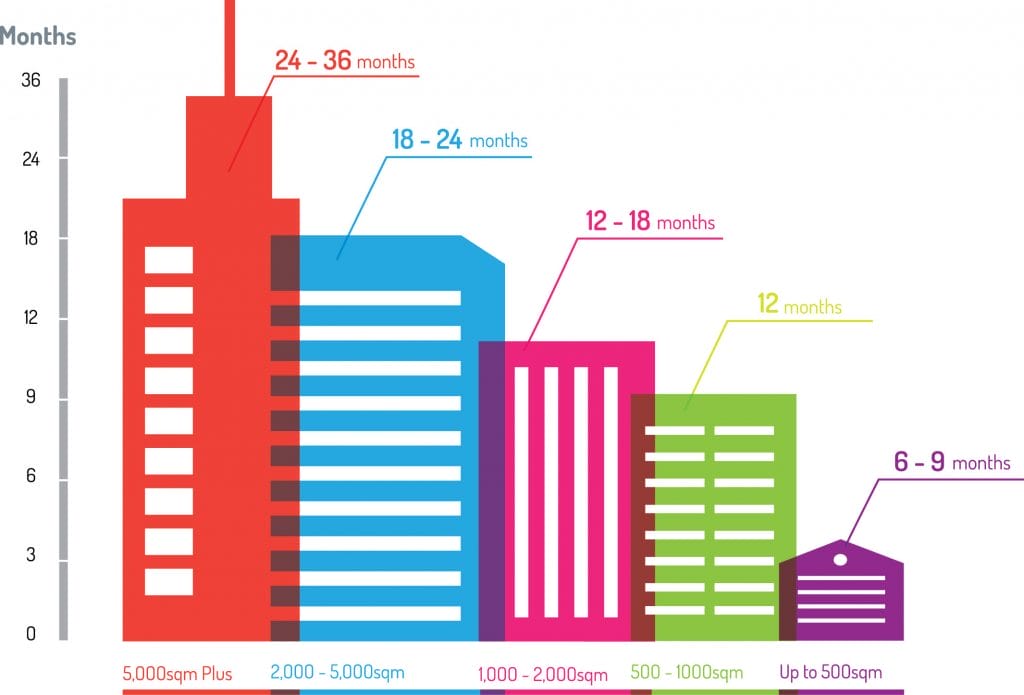
This allows time for a proper process, and time is what creates your negotiation leverage.
The Cost of Being Unprepared
When you start late, you diminish your negotiation leverage. Landlords know you can’t walk away, so they’re less motivated to offer strong incentives or flexible terms.
Internally, you may face rushed decision-making, poor alignment between stakeholders, and a compressed timeline for budgeting, approvals, and delivery. That leads to reactive choices – and often, unnecessary cost.
In short, early planning gives you more control – over your space, your budget, and your outcomes.
